Every year, a few days before Diwali, the house starts to smell different. Dust is cleared, the pooja room is washed, new diyas are lined up on a thali, and somewhere in the middle of all this someone lights an agarbatti. That one thin line of smoke tells everyone that the festival has begun. If you are looking for the best agarbatti for Lakshmi pooja this year, or wondering which natural incense sticks and dhoop to keep in your Diwali pooja samagri, this short guide is for you.
What does handrolled masala agarbatti actually mean?
Most agarbatti you see in shops is made on machines. A handrolled masala agarbatti, also called hand rolled masala incense sticks, is different. A fragrant masala paste, made from natural ingredients, is rolled onto the stick by hand, one stick at a time, and then dried slowly in the open air. Because the paste is pressed on by hand, the stick holds more fragrance, and the aroma comes from the masala itself and not from a perfume sprayed on later.
At Aradhyam, this work is done by women artisans in Mathura and Vrindavan, the land of Lord Krishna. It is slow work and it needs steady hands, but the result is a fragrance that feels softer and more devotional in a pooja room.
Why fragrance matters in Lakshmi pooja
On Diwali evening, families light diyas, welcome Goddess Lakshmi and offer flowers, sweets and incense. Fragrance is part of the offering. A clean, warm, natural aroma makes the room calm, and it helps everyone sit together for aarti without the head-ache that very strong synthetic smoke can cause.
Our Diwali Essentials: what to use and when
Here is how the four Aradhyam Diwali Essentials fit into a normal Diwali pooja.
1. Jagannath Masala Agarbatti: the main pooja stick
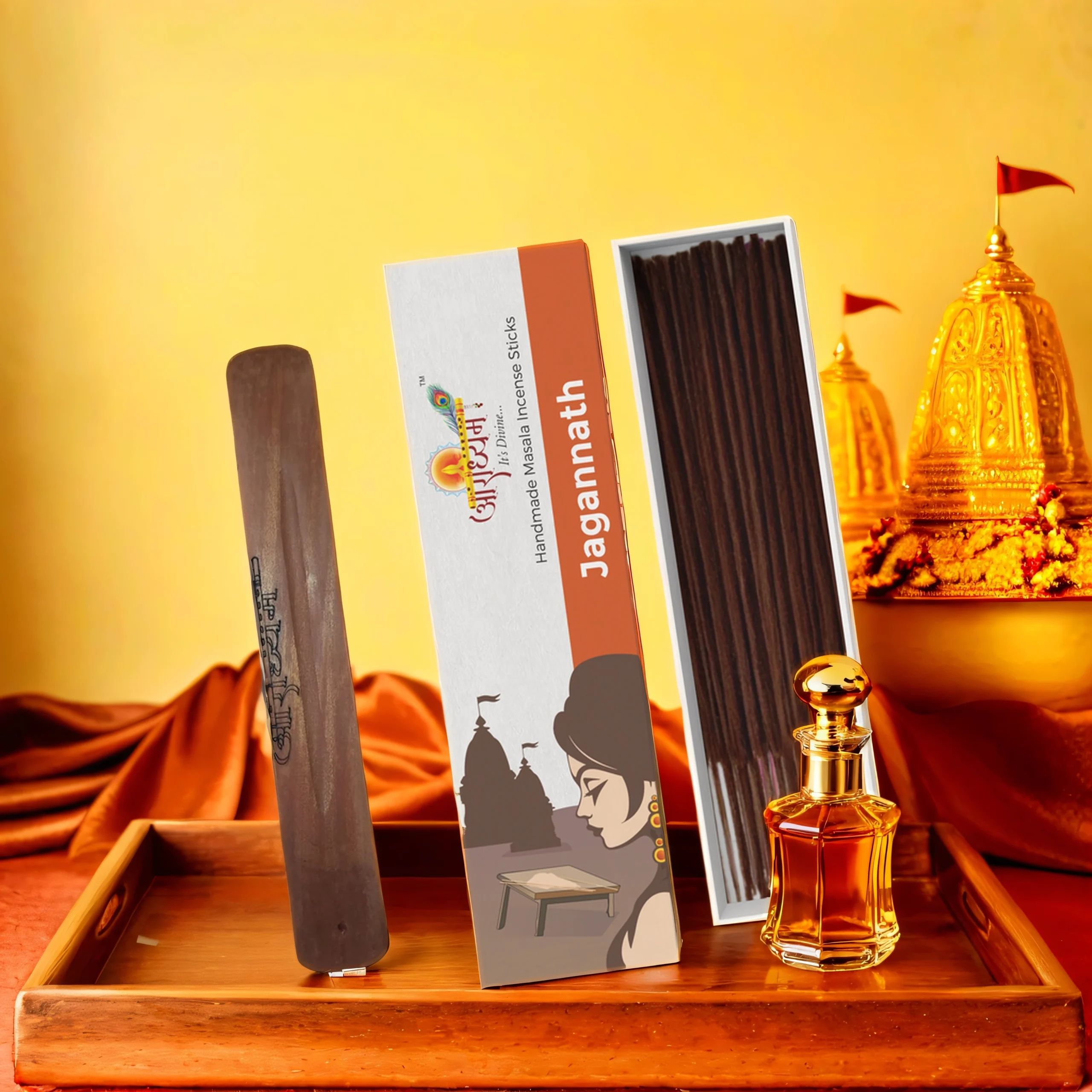
The Handrolled Jagannath Masala Agarbatti is a traditional masala stick, rolled by hand. Light two or three sticks before the aarti begins. This is the one most families will want to burn through the whole evening.
2. Sugandh Dhoop Sticks: for the whole house
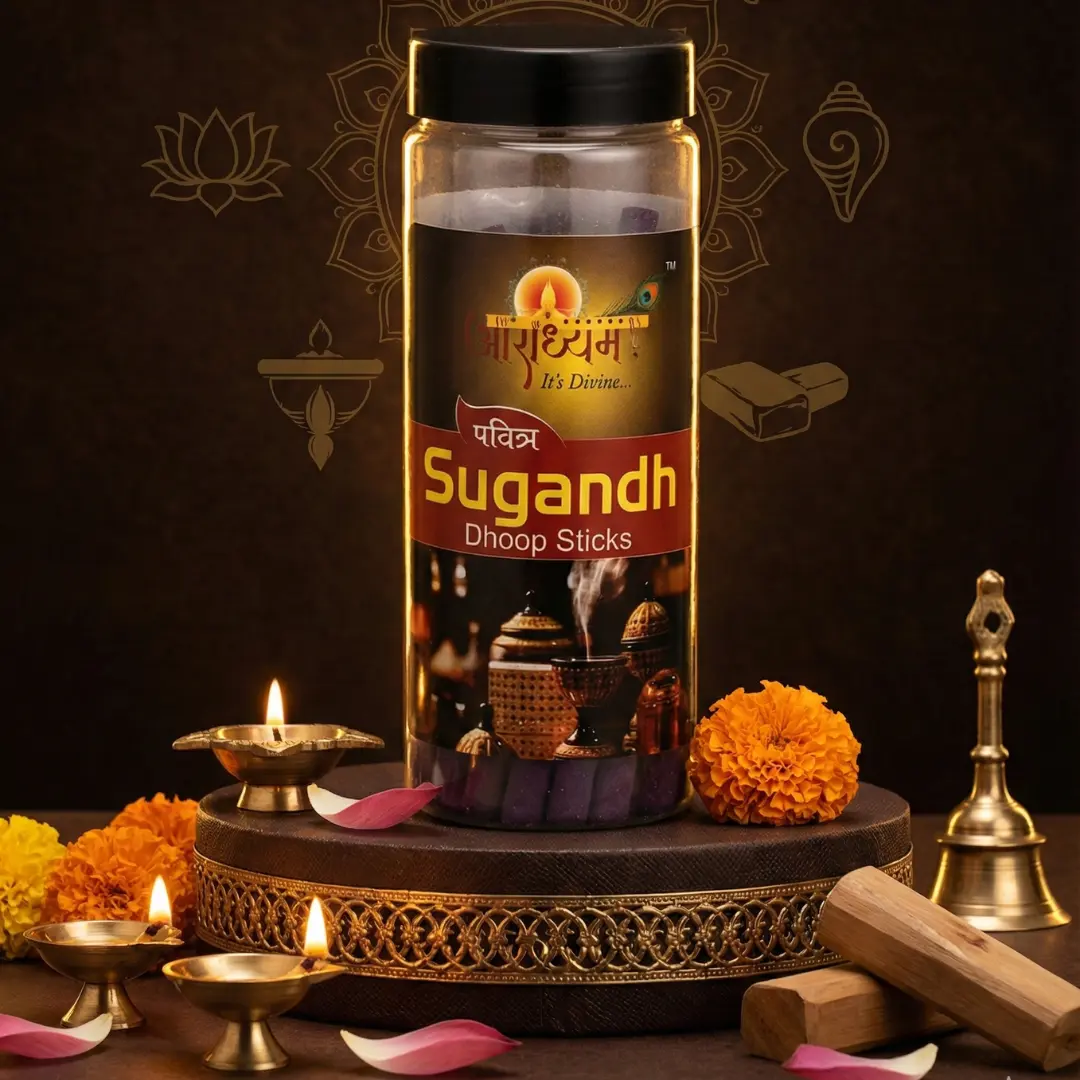
The Luxury Sugandh Dhoop Sticks are charcoal-free and bamboo-free. Each stick burns for roughly 50 to 60 minutes, so one stick at the entrance or in the living room keeps the home fragrant while guests come and go.
3. Sambrani Hawan Cups: for the pooja room
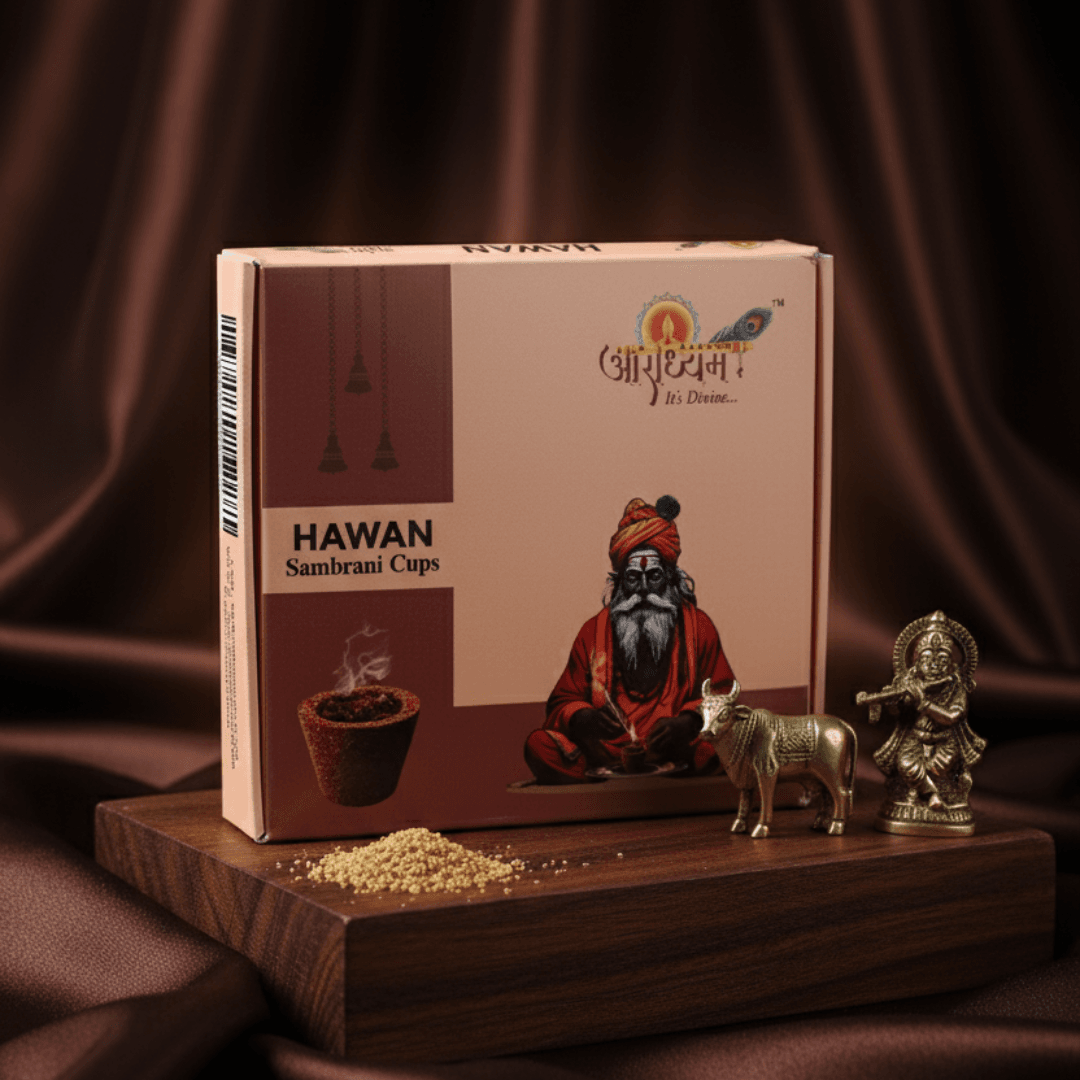
The Sambrani Hawan Cups are made from a blend of devdar, nagarmotha, giloya, guggal and loban. Light one cup on a burner or a small plate just before the aarti. The thick, cleansing smoke is what many families use to purify the space before pooja.
4. Lotus Divya Attar: for the final touch
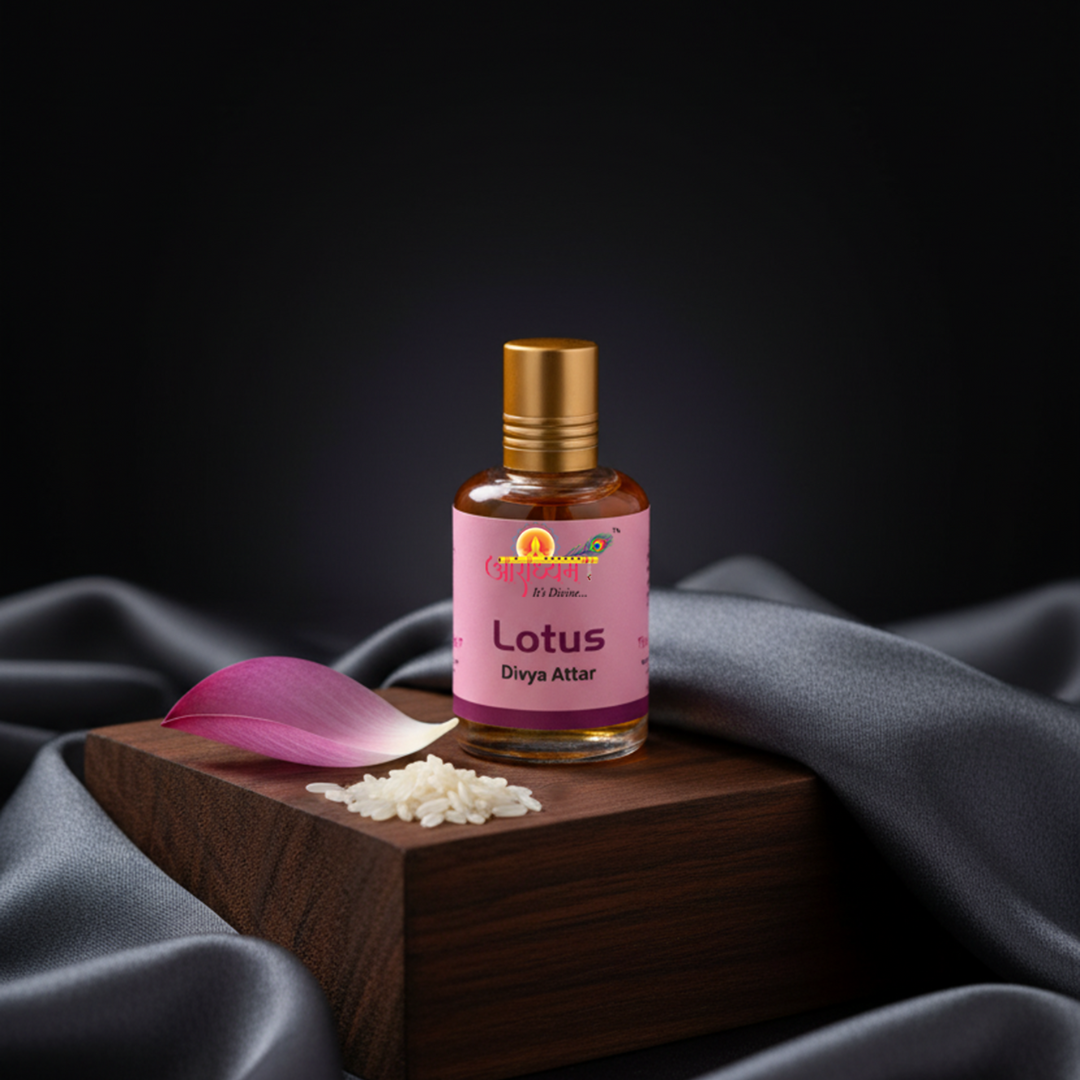
The Lotus Divya Attar is alcohol-free, so it is suitable for pooja and offerings. A small drop on the wrist or on clothes before you sit for pooja, or on the offering to the Goddess, gives a soft lotus fragrance. Lotus is closely linked with Goddess Lakshmi, which is why many families choose it at Diwali.
A simple way to arrange your Diwali pooja
Clean the pooja space first and light the diyas. Burn the Sambrani cup a few minutes before aarti to clear the air, then light the Jagannath masala agarbatti in front of the deities. Keep a Sugandh dhoop stick burning at the main door or in the hall. Finish with a drop of lotus attar. Keep windows slightly open so the smoke can move gently, and never leave burning incense unattended.
How to choose good agarbatti
Whether you choose masala agarbatti, dhoop sticks or hawan cups, look for natural incense sticks that list their ingredients, and avoid ones that smell sharp or leave your throat dry. Hand-rolled sticks usually burn evenly and leave a soft aroma behind. If you are buying for gifting, a set of different forms (agarbatti, dhoop, hawan cups and attar) feels more complete than a box of the same stick.
Frequently asked questions
Which agarbatti is best for Lakshmi pooja?
A traditional handrolled masala agarbatti, with a warm and flowery fragrance, is a popular choice for Lakshmi pooja and Diwali aarti. Many families also like lotus, rose or sandal notes for Lakshmi pooja.
How many agarbatti should I light?
Two or three sticks are enough for a pooja room. More does not make the offering better. It only makes the room smoky.
Can I gift these at Diwali?
Yes. The four Diwali Essentials work well together as a Diwali gift for family and friends who do daily pooja.
You can see all four on our homepage, or order directly on WhatsApp. Wishing you and your family a peaceful, bright and fragrant Diwali. Shubh Deepavali.